Sometimes Hope Wins
People often say that time heals all wounds. I have never believed that. Time does not heal the loss of a child. It simply teaches you how to live with a pain so deep that it becomes part of who you are.
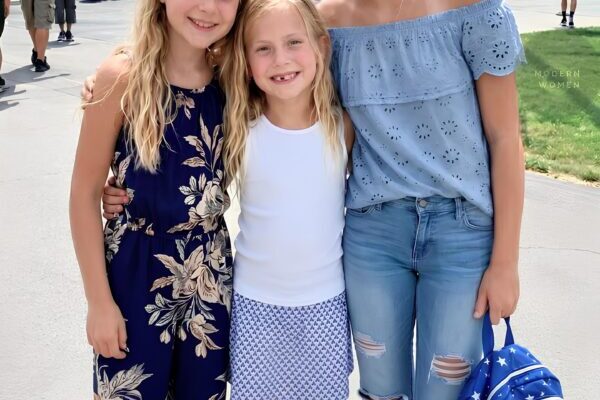
My name is Sarah, and I am the mother of three daughters: Sophie, Mia, and Greta. Sophie is thirteen, Mia is eleven, and Greta was my oldest daughter. For two years, I believed I had lost her forever.
Every morning began with the same unbearable question: Where is my daughter? I searched for answers in every memory, every possibility, and every nightmare. What I never imagined was that the truth had been hidden much closer than I could have ever guessed.
Two years ago, our town celebrated its annual Fall Festival. It was the event everyone looked forward to each autumn. The school grounds were filled with music, food vendors, games, and families enjoying the beautiful weather. My daughters had been excited about it for weeks.
Greta, who was fourteen at the time, had always been mature beyond her years. She was responsible, thoughtful, and protective of her younger sisters. On the morning of the festival, she smiled and told me not to worry because she would keep an eye on Sophie and Mia.
I handed the girls some spending money and reminded them to stay together. They promised they would, and then they left.
Those were the last words I heard from Greta for two years.
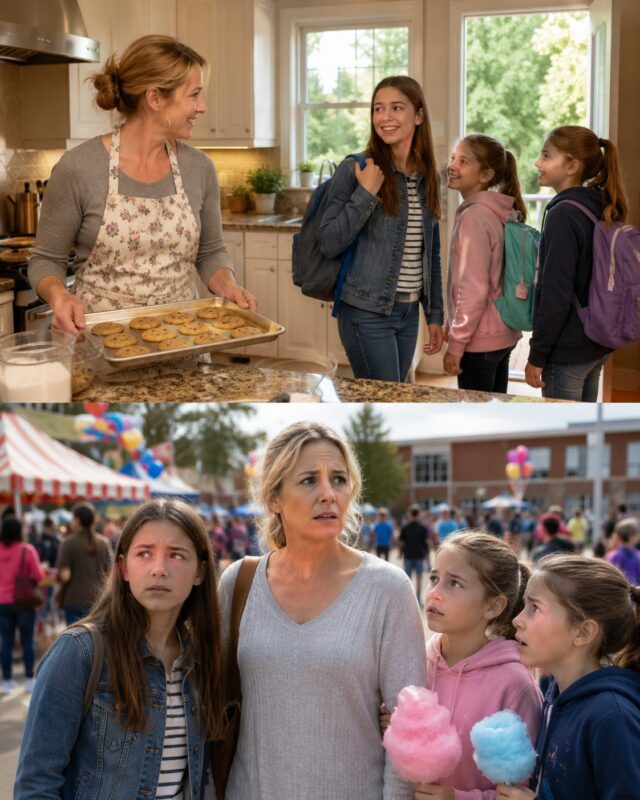
I stayed home for a while longer to finish baking cookies for a school fundraiser. When I arrived at the festival later that afternoon, everything seemed normal. The grounds were crowded with families, and children were laughing as they ran between attractions.
I quickly spotted Sophie and Mia near a game booth. They were covered in cotton candy sugar and having a wonderful time. However, Greta was nowhere to be seen.
When I asked where their sister was, both girls looked confused. Sophie explained that Greta had been with them earlier but had stepped away briefly, saying she needed to check on something. She had promised to return in a few minutes.
She never came back.
What happened next is in the first comment 
What followed were the most terrifying hours of my life. Teachers, parents, volunteers, and police officers searched every corner of the festival grounds and surrounding areas. As darkness fell, the search expanded across town. Yet there was no sign of Greta.
There were no witnesses, no evidence of a struggle, no phone activity, and no explanation. It was as though she had disappeared without a trace.
The weeks that followed were filled with fear and uncertainty. Months turned into years, but no answers came. The police continued their investigation, yet every lead ended in disappointment.
While life continued for everyone around me, mine remained frozen in the moment Greta vanished.
I kept her bedroom exactly as she had left it. Her books remained on the shelves, her clothes stayed in the closet, and her favorite sweater still hung behind her bedroom door. Every birthday, I bought a cake. Every Christmas, I wrapped a gift and placed it beneath the tree.
Friends and relatives often encouraged me to move forward, but they did not understand. How can a mother move on when she does not know whether her child is alive or dead?
The truth is that you do not move on. You simply survive.
Then, one rainy afternoon, everything changed.
I had decided to clean out Mia’s closet. She had outgrown many of her toys, and I planned to donate them. As I sorted through old dolls, board games, and stuffed animals, I noticed something tucked behind a large storage container.
A piece of blue fabric caught my attention.
The moment I saw it, my heart stopped.
I knew that color immediately.
With trembling hands, I pulled the object into the light.
It was Greta’s backpack—the same backpack she had carried on the day she disappeared. The same backpack police had searched for unsuccessfully for two years.
My mind raced with questions. How had it gotten there? Why had nobody found it before?
At that moment, Mia walked into the room.
The instant she saw the backpack in my hands, her face turned pale.
I asked her where it had come from.
Tears filled her eyes almost immediately. After a long silence, she quietly admitted that Greta had given it to her shortly before disappearing and had asked her to hide it.
I could hardly believe what I was hearing.
Mia explained that Greta had made her promise never to tell anyone. As difficult as it had been, she had kept that promise for two years.
Inside the backpack were folders, letters, legal documents, and a journal. There was also a handwritten note addressed specifically to me.
As I unfolded the letter, my hands shook uncontrollably.
The first sentence left me speechless.
“Mom, if you are reading this, then I have finally finished what Dad started.”
The letter revealed a truth I never could have imagined.

Months before her disappearance, Greta had discovered documents hidden among old belongings in our attic. The papers suggested that money and assets left to our family by my late husband had been mishandled by a relative responsible for managing the estate.
Determined to uncover the truth, Greta began investigating. What started as simple curiosity soon exposed a much larger problem involving missing assets and legal misconduct.
Fortunately, Greta had not faced the situation alone. Through her research, she contacted a retired investigator who had once worked with my husband. After reviewing the evidence, he realized the matter was serious and immediately involved attorneys and law enforcement officials.
Because there were concerns that key evidence could be destroyed, authorities recommended that Greta stay temporarily with the investigator’s family while the case progressed. Only a small number of people knew where she was for safety reasons.
Although she could not contact us openly, she never stopped thinking about home.
The backpack contained every letter she had written, every update she wanted to share, and every plan she had made for returning once the investigation was complete.
Then, as I sat crying over the journal, the doorbell rang.
Mia looked toward the front door and smiled through her tears.
She quietly told me that everything was okay and that the case was finally over.
Confused and overwhelmed, I rushed to answer the door.
When I opened it, time seemed to stop.
Standing on the porch was Greta.
She looked older and taller than I remembered, but she was unmistakably my daughter.
For a moment, neither of us moved. Then we ran into each other’s arms.
We cried together as I held her tightly, afraid that if I let go she might disappear again.
She apologized repeatedly for the pain her absence had caused, but I could barely hear the words through my tears.
The only thing that mattered was that she was home.
In the weeks that followed, our family learned the full details of the investigation. The missing assets had been recovered, and the legal case had finally been resolved.
More importantly, we were together again.
We attended therapy as a family, shared difficult conversations, and slowly began rebuilding the years we had lost. Greta no longer had to carry burdens far beyond her age. She could finally return to being a daughter, a sister, and a teenager.
The empty seat at our dinner table was filled once more. Laughter returned to our home, and for the first time in years, the future felt bright.
People often ask whether I am angry about what happened. The truth is complicated. Part of me wishes Greta had trusted me enough to tell me the truth from the beginning. Another part wishes none of it had happened at all.
But above all else, I feel grateful.
Many parents who lose a child never receive answers. I was fortunate enough to receive something far more precious.
I got my daughter back.
The darkness that had surrounded my life for two years finally lifted, and standing in the light was the child I had never stopped loving or believing in.
Sometimes miracles do not arrive with fanfare or grand announcements. Sometimes they arrive carrying an old backpack and a promise finally fulfilled.
And sometimes, against all odds, hope wins.