For years, everyone laughed when I complained about my husband’s strange kitchen habit. My family thought I was being dramatic. My friends thought I was overreacting.
Then one neighbor walked into my kitchen, looked around, and said seven words that changed how I saw my entire marriage:
“Leave him. I know why he does this.”
It sounds unbelievable, I know.
When I first told my sister I was considering leaving my husband because of jars, she stared at me like I had lost my mind.
“Marissa,” she said, “you’re ending your marriage because Eric closes jars too tightly?”
Hearing it out loud made me question myself.
Maybe she was right.
Maybe I was making something small into something much bigger.
But the truth was, it was never really about the jars.
My husband, Eric, had a habit of tightening every lid in our kitchen so tightly that I couldn’t open anything without his help.
Pasta sauce. Pickles. Jam. Mustard. Olives.
If Eric touched it, it became impossible for me to use.
At first, I thought it was harmless. Eric had always been stronger than me. He carried heavy bags, opened stuck windows, and twisted off bottle caps that hurt my hands.
Whenever I struggled with something, I would call him over.
He would open it effortlessly, smile, and say, “What would you do without me?”
I used to laugh.
Back then, it felt like a joke.
Until it stopped feeling like one.
The problem was that it kept happening even after I asked him to stop.
I would be cooking dinner and discover I couldn’t open the sauce. I would run the lid under hot water, use towels, grip it with rubber gloves, and fight with it until my hands hurt.
Sometimes I gave up and opened a new jar.
At first, I blamed myself.
Maybe my hands were wet.
Maybe the refrigerator had made the lid tighter.
Maybe I had somehow closed it too firmly without noticing.
But the pattern continued.
One night, while making pasta for our daughter Lily, I struggled with another jar of tomato sauce.
“Do you want me to get Dad?” Lily asked.
“He’s still at work,” I told her.
After several failed attempts, I opened a new jar.
When Eric came home, I placed the unopened jar in front of him.
“Can you please stop tightening these so much?” I asked.
He looked at the jar, then at me.
“I’m just closing them normally.”
“No, you’re not.”
He frowned.
“Marissa, it’s a lid.”
“I know it’s a lid. I’m asking you not to make it impossible for me to use.”
He opened it with effort, proving my point.
Instead of apologizing, he laughed.
“You really need to work on your grip strength.”
That became the pattern.
I would explain how frustrating it was.
He would act confused.
I would ask him to close lids normally.
He would promise he would.
For a while, things would improve.
What happened next is in the first comment 
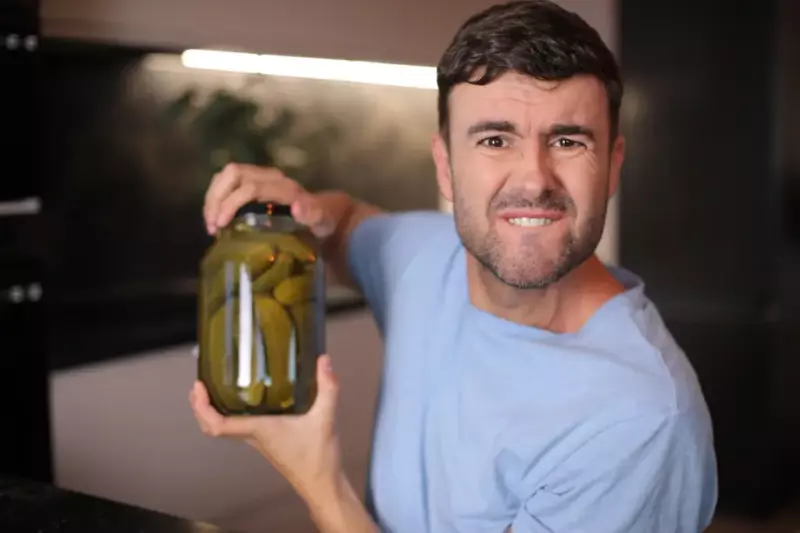
Then slowly, every jar would become impossible again.
Eventually, I started marking certain jars with small pieces of tape so I would know if someone had touched them.
When Eric noticed, he looked at me strangely.
“What is this?”
“It helps me know if someone opened it.”
“Someone?”
“You.”
He shook his head.
“This is getting weird.”
Maybe it was.
But what bothered me wasn’t the jars themselves.
It was that I had asked him for one simple thing over and over again, and he kept ignoring me.
Whenever I brought it up, he made me feel unreasonable.
“You’re upset because I closed a jar?”
But I wasn’t upset because of the jar.
I was upset because I felt unheard.
Over time, I started buying squeeze bottles and transferring everything I could.
I tried to avoid needing help.
Then Eric left for an eight-day work conference.
For the first time in a long time, the house felt peaceful.
No arguments.
No explanations.
No one telling me I was overreacting.
One evening, I tried opening a jar of roasted peppers and couldn’t.
After fifteen minutes of struggling, I knocked on my neighbor Mark’s door.
He answered holding a dish towel.
“Everything okay?”
I held up the jar.
“I need help.”
He laughed.
“Emergency peppers?”
“Apparently.”
He took the jar and twisted.
His expression changed.
He tried again.
The lid finally popped open.
Then he looked at me.
“Why is this thing sealed like evidence?”
I explained everything.
I expected him to laugh.
Instead, he asked if he could see my kitchen.
A few minutes later, he was checking every jar.
Almost all of them had been tightened.
Not just things Eric used.
Things he had never touched.
A jar of artichoke hearts.
A face mask I kept in the refrigerator.
A tiny jar of food coloring from Lily’s birthday cake.
Mark struggled with several of them.
Then he placed one down and looked at me seriously.
“Oh no,” he said.
“What?”
“Leave him. I know why he’s doing this.”
I stared at him.
“That’s a huge assumption.”
“I know,” he said. “But this isn’t about jars.”
He told me about his mother’s marriage to a man who never yelled or became physically violent, but constantly made small things harder for her.
He moved objects.
Created problems.
Made her question her memory.
Then, when she complained, he convinced her she was imagining things.
Mark looked around my kitchen.
“Your husband isn’t tightening jars because he cares about freshness. He’s creating problems that only he can solve.”
I wanted to argue.
But suddenly I remembered every other strange moment.
The time my car keys disappeared before an important meeting.
Eric found them in the pantry.
“You really need to pay attention,” he said.
The time my glasses went missing.
He found them on top of the washing machine.
“You’d lose your head if it wasn’t attached,” he joked.
Every incident seemed small.
Almost meaningless.
But together, they formed a pattern.
Before Eric returned, I decided to test my suspicion.
I bought new jars and closed every lid exactly as I normally would.
Secure.
Not tight.
I took pictures.
When Eric came home, I said nothing.
Three days later, I reached for the salsa.
The lid wouldn’t move.
Neither would the jam.
Even the tiny jar of food coloring had been tightened.
A jar he had never used.
That night, after Lily went to bed, I placed the jars on the table.
“Can we talk?”
Eric looked at them.
“What about them?”
“I loosened every one before you came home.”
He shrugged.
“So?”
“So they’re impossible to open again.”
He sighed.
“Marissa, seriously?”
“I want the truth.”
“I already told you.”
“No. You didn’t.”
He leaned back.
“I close jars. Big deal.”
“It is a big deal because I asked you to stop for years.”
“I don’t even think about it.”
“You tightened my face mask. You tightened Lily’s food coloring.”
He laughed.
“Now you’re accusing me of attacking food coloring?”
And there it was.
The same dismissal.
The same attempt to make me feel ridiculous.
But this time, I saw it clearly.
I wasn’t talking about jars anymore.
I was talking about years of ignored requests, jokes at my expense, and being made to doubt my own feelings.
“I’m not leaving because of jars,” I said.
Eric rolled his eyes.
“Here we go.”
“I’m leaving because I asked the person who promised to love me for one small act of consideration.”
He crossed his arms.
“And?”
“You chose not to listen.”
The next morning, I packed a bag for Lily and myself.
When I called my sister, she arrived within an hour.
At first, she thought I was joking.
Then she saw the bags.
On the drive to her house, I told her everything.
The jars.
The missing keys.
The forgotten glasses.
The constant jokes.
The way I was always made to feel too sensitive, too emotional, or too forgetful.
When I finished, she was quiet.
Then she reached over and held my hand.
“It was never about the jars,” she said.
“No,” I replied.
“It was about making you doubt yourself.”
She was right.
The divorce took months.
Eric told people I left him over kitchen jars.
At first, people laughed.
Then I explained the entire pattern.
I didn’t exaggerate.
I didn’t insult him.
I simply told the truth.
Eventually, people understood.
Even some of Eric’s relatives admitted they had noticed the same behavior.
Months later, Lily and I moved into our own apartment.
One Saturday morning, I made pancakes.
I reached into the refrigerator for strawberry jam.
Without thinking, I twisted the lid.
It opened easily.
I stood there smiling.
To anyone else, it would have seemed like nothing.
But I knew what it meant.
It was never about a jar.
It was about living in a home where no one was quietly making my life harder just to remind me they could.